

How to Get a Lower Mortgage Rate Than the Average (2026)

How to Get a Lower Mortgage Rate When Rates Are Above 7%
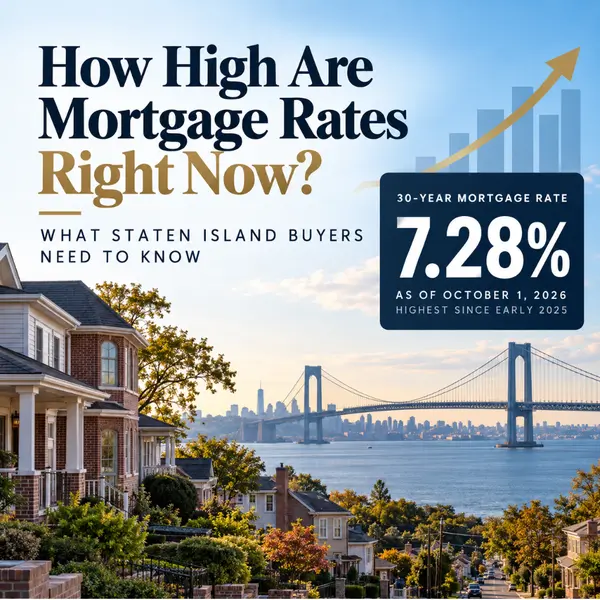
Start by comparing quotes from several lenders, because rates vary on the same day. Then improve what you control: credit score, down payment, and loan type. On a $600,000 loan, cutting the rate from 7.28% to about 6.75% would lower principal and interest by roughly $210 a month, by our calculation.
Do all lenders offer the same rate?
No. On October 5, 2026, Zillow-based daily data showed about 7.40% for a 30-year fixed, while one credit union listed its 30-year fixed at 6.75%. That credit union is not on Staten Island and may have membership rules, but it shows how wide the spread can be. Get written quotes from at least three lenders, such as a bank, a credit union, and a mortgage broker, and compare them on the same day for the same loan.
What lowers my rate?
- A higher credit score. Lenders price better rates for stronger credit.
- A larger down payment. Less borrowed usually means less risk for the lender.
- A shorter loan term. The 15-year fixed averaged 6.60% on October 1, versus 7.28% for the 30-year, though the monthly payment is higher.
- Loan type. FHA, VA, and conventional loans are priced differently. Ask which you qualify for.
- Assistance programs. Ask about first-time homebuyer programs, including those offered through SONYMA, New York State's housing finance agency.
Are points worth it?
One point costs 1% of the loan, or $6,000 on a $600,000 loan, and lowers the rate by an amount that varies by lender. Divide the cost by the monthly savings to find your break-even. As an illustration, if $6,000 bought a 0.25-point cut, saving about $101 a month, you'd break even in about 59 months, close to five years. If you might move or refinance sooner, points may not pay off.
What about a rate buydown or an adjustable-rate loan?
A temporary buydown lowers your rate for the first one or two years, often paid by the seller or builder. An adjustable-rate mortgage (ARM) starts with a lower rate that can change later. One credit union listed a 10/1 ARM at 6.0% on October 3, 2026, in line with ARMs generally starting lower than fixed loans. Make sure you could afford the payment if the rate rose, and ask each lender for the worst-case figure.
Should I lock my rate?
If the payment works at today's rate, locking can protect you from further increases. Ask about the lock period, any fee, and whether a float-down option is available if rates fall before closing. See our post "Should You Wait for Mortgage Rates to Come Down Before Buying on Staten Island?".
Frequently asked questions
How do I get a lower mortgage rate? Compare multiple lenders, raise your credit score, put more down, and ask about points, buydowns, and loan programs.
Is the rate I see online the rate I'll get? Not necessarily. Advertised and average rates assume certain credit and down payment levels. Your quote may be higher or lower.
Do mortgage points save money? Only if you keep the loan past the break-even point. Divide the cost of the points by the monthly savings to check.
Is an ARM a good idea? It can lower your starting payment, but the rate can reset later. Only consider it if you can handle a higher payment.
Want help comparing loan options for a Staten Island purchase? Contact DiTommaso Real Estate at 718-667-8000 for lender introductions.
Categories
Recent Posts



GET MORE INFORMATION

Agent License ID: 10401313724